Context and Culture

and I only have the one…
Context is everything in heritage conservation. As any of my former students could tell you, it is the key to determining the significance of a site. Context includes issues like rarity, authenticity, historical impact, artistic value, etc. If I have hundreds of walled cities in China – as once existed, only those that were exceptionally intact or beautiful or impactful would be considered significant. If, however, I have only one walled city surviving, its significance immediately becomes global.
Context is also important in terms of culture. There is a Belgian village in Japan which is sort of like a cultural amusement park, but we can successfully argue that it does not have authenticity because, well, it ain’t Belgium. Any cultural significance it has is related to the how and why of creating it and visiting it. Yes, Disneyland has significance, but that significance – THE CONTEXT – is America in the 1950s and not how pirates lived in the Caribbean. Continue Reading
Selling Out or Keeping It Real?

An article in the Washington Post yesterday described the economic challenges facing great European landmarks and how many are turning to corporate sponsorships and licensing deals to help defray the costs of maintaining ancient buildings. This practice in turn has caused criticism from those who feel it is wrong to “sell” your collective heritage. Continue Reading
Another three weeks in China: Weishan 2012
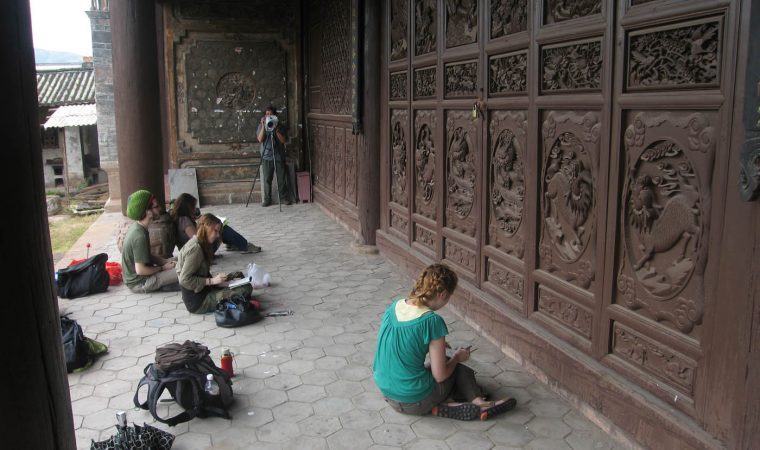
Another three weeks in China, my third trip in a year, with eight SAIC students who did a great job refining the SAIC plan for the Weishan International Arts Center at the Dong Yue Temple complex, which we first got involved with back in 2004. Continue Reading
Categories Are Your Frenemies

When I was a kid, there was a tween game where you sat in a circle and clapped and called out “Categories! Names Of!” and then someone shouted a category and you had to keep on shouting out examples of that category or you lost the game.
The nature of thought requires us to divide things into categories. This is good, because it facilitates learning. We need categories to begin to understand the multivalence of our world. To this extent, categories are our friends. As our understanding progresses, we begin to see the limitations – the false boundaries – of categories. As we grow, categories become our enemies.
Architectural history is a good example. We begin by learning styles and periods. Federal, Italianate, Queen Anne, Richardsonian Romanesque, Beaux-Arts, Craftsman, Art Deco. We study the defining characteristics of each of these styles and pretty soon we are able to survey buildings in the streetscape and categorize them.
Weishan 2012 – Want to go to China?

For nine years I have been involved in the effort to preserve the Weishan Heritage Valley in Yunnan, China. This historic town and valley, which includes Weibaoshan “the quietest mountain in China” and home to 22 Taoist and Buddhist temples, is a still undiscovered treasure just a mountain pass away from Dali, which as been a bit of a tourist mecca for two decades. This summer will mark our fourth student study trip to Weishan, and we are upping the ante by working on the development of a permanent arts studio and arts center in the historic Dong Yue temple/Tai Bao and Shi Wang palace complex. Continue Reading
Chicago Preservation Update February 2012

Despite appearances to the contrary, I am in Chicago more often than not, and it has been a while since I updated this blog on the key preservation issues in the city and region. The reigning issue for the last two years has of course been Prentice Women’s Hospital, a breathtaking flower of the union of engineering and architecture designed by Bertrand Goldberg in 1974-75 and slated by Northwestern University to become a vacant lot.
The National Trust made it one of the nation’s 11 Most Endangered Sites last June (I made the announcement) and now the trinity of preservation organizations, the Trust, Landmarks Illinois, and Preservation Chicago, are promoting both a series of CTA subway ads for Prentice and a contest to SHOW PRENTICE SOME LOVE for Valentine’s Day! My job is to wear my Save Prentice t-shirt at major sites across the globe and I got a good start at Macchu Pichu last month. Planning on Angkor Wat next month. Continue Reading
Heritage and the New Economy

“The success of preserving our global cultural patrimony is not merely a function of financial or economic investment, but requires implementation of a methodology encompassing several essential and inter-related factors that lays the foundation for long-term sustainability.”
“Over time, the challenge is not just the implementation of world-class conservation, but to invest in local conservation and economic capacity.”
The above quote from the Global Heritage Fund’s 2008 white paper “Sustainable World Heritage Preservation in Developing Economies” epitomizes the 21st century approach to heritage conservation (historic preservation) that combines earlier curatorial and architectural standards with an advanced understanding of political and social economy. This advanced understanding is one of the reasons I was pleased to accept the role as Chair of the Senior Advisory Board of the Global Heritage Fund this fall. Continue Reading
Community Planning in Heritage Conservation

I recently became Chair of the Senior Advisory Board of the Global Heritage Fund, an organization I have been involved with for almost four years. GHF has patented a Preservation by Design® approach to saving World Heritage in developing countries. The approach follows to some extent the disciplinary boundaries we regularly bridge in teaching historic preservation: Design, Planning, Conservation and History. For GHF’s Preservation by Design®, the four are Planning, Conservation, Community Development and Partnerships. The emphasis on Community Development and Partnerships is key to the modern practice of heritage conservation. Continue Reading
Weishan 2011
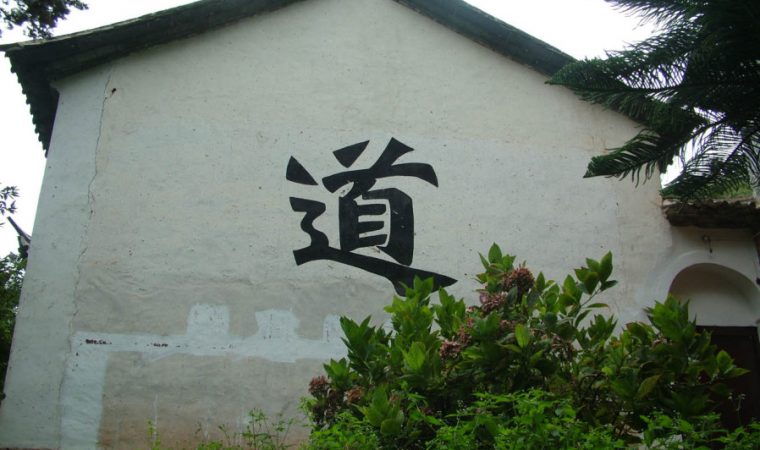
This is Dao, written on the side of a temple on Weibaoshan, the “quietest mountain in China” deep in Yunnan. Dao means the way, which can be as simple as a road or path or as complex as all of the doubts and triumphs within the human psyche. As one of the two 2,500 year old Chinese traditions, Daoism is the one that looks inward at the self, both in an attempt to follow right action (to borrow a Buddhist phrase) and to seek contemplative truths. Continue Reading
Shanghai Art Deco

So we are in Chengdu, scheduled to leave on an 11:30 flight to Shanghai. It is cancelled, stranding our group of 21. I have a lecture in the Peace Hotel in Shanghai at 7:45 PM, so China Advocates gets me on the 3:50 PM flight and then books a later flight (which will require at least two fight/negotiations by Huo Yujia (Nancy) our tour guide) for the other 20. I arrive in Shanghai at 6:25, get my bag at 6:35 and get in the waiting car, which delivers me to the Peace Hotel at 7:25. I check into the most FABULOUS 6-room suite I have ever seen, change my clothes and run up to the 11th floor Ninth Heaven room for the lecture.
My friends Professors Yang Li and Mei Qing, whom I met in Amherst at the ICOMOS conference in May, are already there, and the organizers are amazed at my composure, but this is hardly my first time for this sort of minor adventure. In the audience is Peter Hibbard, who literally wrote the book on the Bund and knows ten thousand things more about it than I do, and gives me a signed copy of his book.