Section 106 of the National Historic Preservation Act

Last week the Advisory Council on Historic Preservation put out a call for review of the Section 106 process. What is Section 106? Well, it is basically the federal review process for properties listed on (or eligible for) the National Register of Historic Places. I have taught this process to public officials for decades, and I have been party to the process in many cases, including several projects here in San Antonio.

Foundations of 1875 St. James AME Church as uncovered in 2020. Below is the result of the Section 106 process, completed 2022.

In a time characterized by assaults on civil institutions small and large, a “review” of this process, which has existed in some form for nearly 60 years, is cause for concern. Section 106 is a type of regulation, and regulations are often categorically opposed by self-styled populist politicians and struggling subpar businesspersons. The nuanced reality is that any consultative process will tend to improve outcomes.

With the notable exception of the Milton Historical Society, a Section 106 review that was a perfect storm of bad outcomes. I was hired by the National Trust to figure out what went wrong here 20 years ago. Architect, client, and agency were all at fault. In that order.
Almost a year ago, the Executive began trying to get around regulations like Section 106 through imaginary energy crises, military readiness, and other performative red herrings. Heck, they even demolished a federal building illegally (and of course performatively, without a long-range plan – see my blog about it). But this is not to put Section 106 under one political banner, because in 2024 Section 106 was being challenged as an impediment not to knuckle-dragging capitalists, but to progressive causes like climate change and renewable energy. And bike lanes. I blogged about it here.
There is also an exception being drawn up for military housing, which makes sense intuitively.

Well of course I’m going to pick an architecturally significant example of military housing.
Your intuition is not wrong, but it has no context. The context is that military housing is like all things military – it never has to justify its budget. That means that the housing got “improved” regularly in the 1950s and 1960s and 1970s. That means it has lots of layers added, with each having the potential to become a unique mold biome. And of course those of us involved in actual Section 106 reviews in a city with lots of military bases knows that this has been an issue for more than a decade. Not new.

Tile looks 1930 but that sink looks scallopped in the awful 80s.
Here is how Section 106 works:
1. There is a federal project. This could be obvious, like a highway or a building, or it could be a permit from the Army Corps of Engineers to build along a navigable waterway.
2. There is – or is not – a historic resource.
3. There is – or is not – an effect on that resource.
4. If there is an adverse effect, you oughta try to do something about it.
5. If nothing can be done, you go ahead anyway.
Here is one of my favorite results – the Solomonic baby sliced in half:


The LITERAL bottom line in the process is that the project can proceed, something the Post Office knew back in 1991 when the above article appeared. They knew they could tear it down after they went through the process. (BTW photo proves that I was out standing in my field).

Or you can just repackage the project into different phases that do not engage Section 106 as much.
At her request, I spoke to National Trust for Historic Preservation CEO Carol Quillen last summer about this issue and what should be done. After all, Section 106 has not been revised in over two decades. The conclusion I shared with her is the same I reached years ago in the effort to get the National Register of Historic Places to reflect the diversity of American history. The issue is rarely the law or regulation itself, but the practice of its implementation.

Ah yes, Federal Building West. We encouraged them NOT to worry about the original 1974 bathroom in the basement.
As with many current initiatives from the federal government, it appears that they are trying to solve a problem that doesn’t exist. In over 40 years of dealing with historic preservation review at the federal, state and local level, I have consistently seen that at least 97 percent of reviews are dispatched in a few days. My friend and Washington State SHPO Allyson Brooks provided statistics from last year. They did 5,371 reviews with a response time of 3.7 days. 45 of the projects were “adverse affects”. It could be that there is not a problem, or perhaps there is that one guy with a problem who wants to make everyone pay for it.
Moreover, most federal agencies have executed Programmatic Agreements that essentially resolve potential Section 106 issues in advance, and provide an agency-specific and resource-specific process for dealing with the rules in a more streamlined way. But that doesn’t play well in a media landscape designed for third graders.

Our National Historic Landmark army base is a decade older than Fort Sheridan in Chicago.
So what specifically is the ACHP looking to review?
1. Defining the undertaking and establishing the area of potential effects
I suppose this is to fend off surprises by limiting the scope of the undertaking. The old newspaper clipping above is a case where the new building did not require the demolition of the old building per se. It’s just that, in order to stage the construction of the new building, the old one had to go.
2. Assessing indirect and cumulative effects
I guess this is to try to limit the review to immediate effects rather than long-term or indirect ones. I can’t imagine this affects a large number of cases. One of the interesting ones I witnessed – which was resolved by the Advisory Council in favor of the military, was the issue of cutting trees at the 1930 Randolph Air Force Base. The Air Force wanted to cut down trees to limit bird strikes, and the SHPO wanted them to keep original trees. The Air Force won, and yes, it took a while.
3. Managing review/scope of review for long linear projects with limited federal involvement
This could be for projects like San Pedro Creek or Brackenridge Park that are primarily projects of state and local agencies and the federal role is a permit. Again, Programmatic Agreements can help with this.
4. Managing timelines for review.
Yeah, well that would be good. In fact, this is the big one. European countries have more stringent regulations than we do, and their businesses are used to going through the process. It must be worse there, right? No. See, they have a process which has an endpoint. The US has so many lawyers that projects can get tied up forever not by the regulations, but the ancillary and attendant lawsuits. There is no endpoint in a litigious environment. That doesn’t happen in Europe.

They are better at trains too
You can tweak the regulations all you want, but unless someone sets an example of NOT filing frivolous lawsuits, the timelines will get longer not matter how short the laws are. Anyone know anyone who could set such a noble example? Bueller? Bueller?
My prediction is that the review will cause more problems than it solves. If you go digging into a legal process that is slow 3% of the time, you will reduce the quality of outcomes at the very least, and likely harm that high-performing ratio.
JULY UPDATE
Well, the Advisory Council has flouted its own process, in order to flout the process. Like a suicide bomber! See my latest blog and the preservation community response.
Mejor pedir perdón que permiso

“It is better to seek forgiveness than permission.”
Unless you believe in justice and the rule of law. Or have an economist’s need for certainty and market stability. If you are just trying to get away with stuff, perdón beats permiso for sure. Yay criminality!

This is an attitude you come across in historic preservation – indeed, urban development in general – all the time. People just go ahead and whack away at their building without permits and hope they can get away with stuff.

Often they do. In San Antonio, violating a permit (or not having one) does not have a financial penalty. In some cases, the building owner can be required to put things back the way they were, although absent clear and malicious intent, that rarely happens. In other places, you can be fined up to $500 a day until you put it right.


Usually it is windows, because a generation of shilling has left the average building owner believing that replacement windows are normal and helpful. You can read all about that here and here.

Now take a gander at the above photo. What is it? It is a kiosk, I say. That is what the permit that was approved in 2018 said. A park with some trails and benches and a small retail kiosk.

So, the developers got an approval for a kiosk, which quietly morphed into a 5,000 square foot restaurant, plus 3,000 square feet of outdoor seating. Let’s hear it for open space!
This case is not the malicious building owner as much as the misdirecting one, and often it is the city facilitating the sleight-of-hand. We (Conservation Society) called it “bait-and-switch” in our statement, which recalled the drawings from 2018 which included no restaurant at all.
We do see this from the development community, especially between the “conceptual approval” of a development and “final approval.” “Conceptual approval” will often feature nicely finished new buildings, which then get dumbed down into cereal boxes by value engineers prior to “final approval.” Or, the old building they promised to save has deteriorated so much (often by active undermining) that they can no longer save it, it costs too much cry cry cry.

I think it would be better if we got back to a level playing field where ALL building owners played by the same rules, and promises made one year were still valid the next. Here’s hoping that an era of sneaking and cheating comes to an end.
JULY 2021 UPDATE
I noticed that the Louisiana legislature is considering a bill that would allow New Orleans to double the fines for violating building permits to $1,000 a day to “deter bad actors”. That would be good here as well.
Conserving Culture and Conserving Nature: Assets and Liabilities

The World Heritage Convention is nearing the end of its 40th anniversary, and since what we do here at Global Heritage Fund is help preserve World Heritage Sites in developing countries, I have been fielding a lot of inquiries on the status of the World Heritage Convention. As in so many aspects of heritage conservation/historic preservation, I have seen evolution in the field. In terms of sites inscribed on the World Heritage list, I would venture that we have seen some of the same shifts we have seen in “historic preservation” as a whole.
Continue ReadingThe crux of the problem
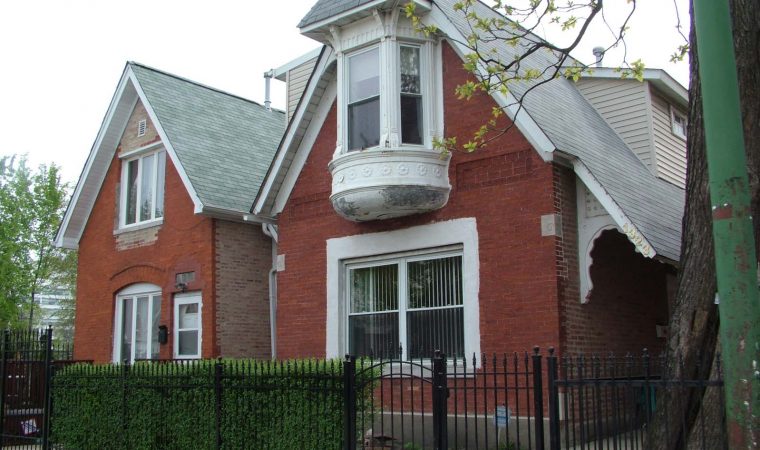
During times of economic recession it is good for preservation because people can’t afford to build as many new structures or do questionable alterations to historic ones.
During times of economic recession it is bad for preservation because people can’t afford to rehabilitate historic buildings. Continue Reading
Oak Park settles down a bit

Well, from the tenor of the panel discussion in Oak Park this morning, the Fox News-style polarization of preservation has died down a bit. This is a good thing. A developer, a village president/architect, a local architect and two preservationists made up a panel that was distinguished more by how much they agreed than by the false “Preservation or Development” dichotomy that was set up.
The biggest laughs came to Jonathan Fine of Preservation Chicago who said the title “Historic Preservation: Too Much of a Good Thing?” reminded him of “Women’s Suffrage: Too Much of a Good Thing?” or “Child Labor Laws: Too Much of a Good Thing?”. He is right that preservation has to keep justifying itself. Continue Reading