Progress in Lima

The main plaza from the roof of City Hall
We have been in Lima for a week now with 15 students from our Cultural Futures: Lima class and it has been very successful. We just completed presenting our ideas and designs that were developed during the class and during the last week of hard work in the Municipalidad, which is located right in the center of town on the lovely Plaza des Armas.
With the aid of Gunther Merzthal, the city’s urban agriculture expert, we presented several projects to various agencies and officials. One project we developed during the last semester and revised based on feedback from the Department of the Environment, which is the primary contact in the city administration for our SAIC class. This was a green roof for the City Hall in Lima. They likely were aware of Chicago City Hall’s famed green roof and our students came up with a design that not only integrated social and educational functions but also remained within the sight lines required by the landmarks agency, ProLima, which oversees development in the Cercado, the center of Lima which was inscribed as a World Heritage Site some two decades ago.
Pipal and the Peterson Prize
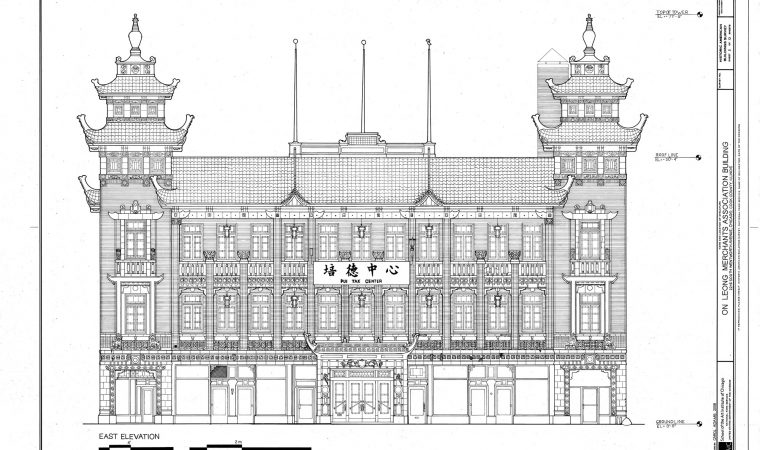
Charlie Pipal has taught our Physical Documentation class since the onset of the millenium, and during that time his students have won six Charles E. Peterson prizes in the NATIONAL competition for the best HABS measured drawings. Charlie never takes the credit and always gives it to the students. He is right, but HIS students have done this six times in eight tries, so I would suspect he has something to do with it.
Last year I wrote a blog calling Charlie the Michael Phelps of preservation because his students’ drawings took home not only the fourth Honorable Mention for a set of HABS drawings, but a Third Place! Continue Reading
More on Yunnan 2009
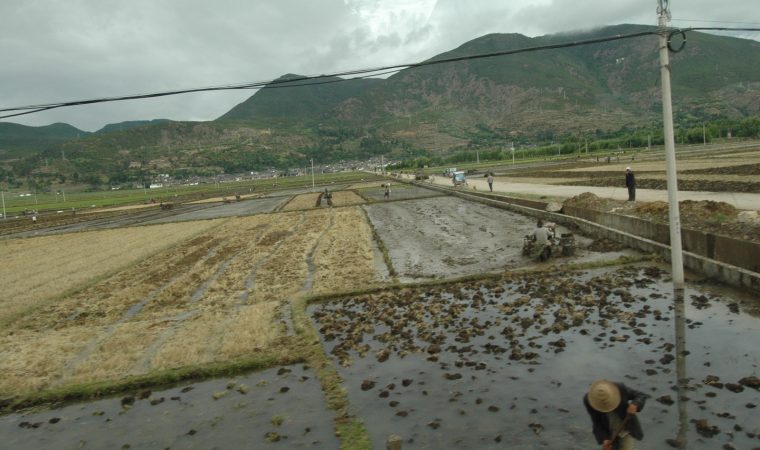
The rice replanting was in full swing throughout Yunnan when we were there in May and June, and you could watch this millenia-old agricultural ritual as we traveled north from Weishan to visit Jianchuan, to see the famous grottos and also the restored temples in Shaxi town. The Swiss had been involved in the efforts to restore these temples, which have some very excellent early Ming duogong, something you rarely see. Anyway, here are the temples at Shaxi in Jianchuan, Yunnan.
2008

What will 2008 bring for preservation? More nasty facade projects? Fewer teardowns thanks to the meltdown of the housing market? I welcome your input and will share with you the SAIC HPRES plans for 2008, which are shaping up:
First, I am off to India along with some of our other faculty for a preservation (building conservation) conference in Ahmedabad in two weeks – less than two weeks actually. I will give a keynote on Preservation in the U.S. and present case studies of green preservation (River Forest Women’s Club) and design issues (Milton Historical Society).
This year marks the 40th anniversary of the Chicago Landmarks Ordinance and a number of organizations are planning events, including the exciting new exhibit at the Chicago Architecture Foundation, curated by SAIC alum Kate Keleman called Do We Dare Squander Chicago’s Great Architectural Heritage? I am also moderating a panel of community preservationists in April on the subject, and we just started talking about a symposium in September on the history of preservation in Chicago. The City will kick off with some lectures this Spring, including a big name (pending) in May for Great Places and Spaces. Continue Reading
The problem and beauty of China

The problem and beauty of China is that nothing stays the same. This is why it is the middle kingdom, the sensibility and experience of all humanity.
We are just back from a 3-week preservation trip to China. We go to Weishan, one of the few communities there with a true commitment to preservation. It is in far southwest Yunnan province, in the Mekong Delta, and it shares many cultural groups with southeast Asian nations like Thailand, Laos and Burma. It is a beautiful place, but also very real and everyday. The food is better than anywhere. They have 50 kinds of mushrooms. We ate three meals a day and each meal was 10-12 dishes and it took the better part of a week before we saw a dish repeated. Nothing the same, but always good. We had enough clout to get two formal dinners with Mayor Zhang of Weishan, which consists of a lot of toasting with rice wine and gifts and the best food. Continue Reading
Through a Glass Darkly

What rant shall I leave you with as I head to China? How about the past and the future….
Twenty years ago, I spent the better part of a year backpacking around South Asia. My goal was India, and I had this idea that I could see the past – steam locomotives, teeming early Industrial metropoli, a populace caught between agrarianism and urbanism like Chicago in 1880.
Today, of course, we go to China to see the future, skyscrapers flashing bright video skins and a billion people taking capitalism to the next step.
I am going there on an historic preservation student study trip, so I guess we are looking to the past. We go to Weishan, an old Southern Silk Road town in Yunnan province 75 clicks south of Dali. Founding city of the T’ang era Nanzhao state some 1300 years ago. Weibaoshan (mountain) hosts 22 Tao and Buddhist temples. Almost no Westerners go there – it barely registers on Google. Weishan is also one of the few places in China practicing historic preservation – most of Beijing and Shanghai are developing so fast they make 1880s Chicago look like a backwater. Everything is new and everything old is being plowed under. Continue Reading