Ciudad Perdida: The Urbanism of the lost city

Los Angeles, a couple weeks ago
A year ago I was teaching a class about cities, about urbanism. The perspective of that class was the history of ideas about modern city planning from the 1890s through the rise of modernism and sprawl in the 1950s to the Jane Jacobs revolution in the 1960s and its continual reverberations to the present day. We read Glaeser, whom I have reviewed before in this blog, and we tended to think of cities in their modern iteration, as large megalopoli built on huge freighters, large trucks, mile-long trains and cars more numerous than bubbles in a champagne glass, their profiles distinguished by skyscrapers recognizable from miles away, their plans defined by a radical manipulation of the natural landscape. Something entirely different from the cowering walled cities of the medieval world. Something defined, as Le Corbusier was wont to do, by fast and effortless modes of transportation.
Think of the postcards of skyscrapers from the 1920s, always with planes flying around them, cars and trucks bustling at their bases, dirigibles docked on their masts. The modern city was about effortless transportation and commerce, about erasing barriers to speed, whether vertical or horizontal. The skyscraper and the highway, massive and modern. Continue Reading
End of March
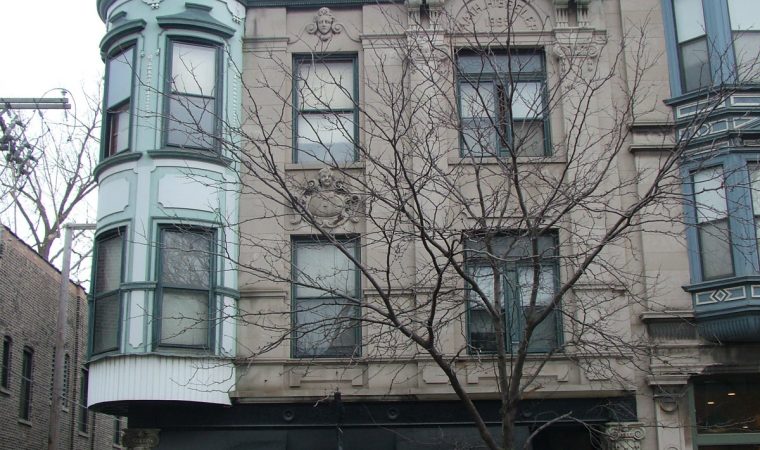
March is going out more lionine than lamblike and perhaps April will be less hectic – it looks like I am staying in town all month (unless you count two tours to Lockport and Joliet for AIC). Our Masters in Historic Preservation program has a lot going on this month, starting next Monday, April 6 when my seminar class presents our ideas for interpretation of the Armitage-Halsted district to Alderman Vi Daley, the CTA and members of the Sheffield community. This class has done a great job of tackling a range of interpretive elements, from website and brochure and banners to a couple of installations at the Armitage L station designed to get people looking at the amazing buildings of the Armitage-Halsted historic district, with their Renaissance (Baroque) inspired architectural details in metal, stone and brick. Here are a few samples of these delicious buildings: Continue Reading