Life and Death Heritage

On July 23, 1986 I attended the funeral procession/cremation of Tjokorda Gde Oka Sukawati, a prince and stepbrother to the last king of Ubud in Bali. I was traveling there (long story) and stumbled across the ceremony, which featured an amazing Pelebon procession in the Balinese Hindu tradition, including a bade, an 11-tiered pagoda tower used to carry the deceased to the cemetery. Continue Reading
Age Value and the 50-year rule

Field memorial, Daniel Chester French, Graceland Cemetery, Chicago
The latest issue of Forum Journal (from the National Trust for Historic Preservation – you can join here.) has an article questioning the 50-year rule. The National Register of Historic Places was created in 1966 and shortly thereafter the Park Service promulgated policies for listing properties on the National Register. Eight categories of properties have to jump some more hurdles to become landmarks: birthplaces, gravesites, cemeteries, memorials, relocated buildings, reconstructed buildings, houses of worship, and buildings less than 50 years old.
Now, first it should be noted that I can name properties in each of those categories that ARE on the National Register of Historic Places, but they had to prove extra significance. Continue Reading
Ghost Sign at Roger Brown Studio

SAIC did a good job repointing the wall at the Roger Brown Study Collection at 1926 N. Halsted in Chicago, saving and enhancing the existing Daily News ghost sign that has been there for the better part of a century. Here is the before-and-after courtesy of Ron Fitzpatrick, Director of Design and Construction.
This ghost sign may have helped inspire Roger to choose the building for his home and studio back in the 1970s. Ghost signs are a fascinating phenomenon, and hard to preserve. We just lost the 1960s Pago Pago sign downtown, and invariably they appear and disappear quickly. Here is one that emerged for less than a month in 1997, on North Avenue near Humboldt Park. It is clearly a pre-Prohibition sign revealed when a nice Victorian was demolished adjacent to Roeser’s Bakery – Seipp was a major Chicago brewer and the builder of Black Point in Lake Geneva. Continue Reading
Oak Park Commercial

My graduate student seminar this Spring at the Master of Science in Historic Preservation program is focused on historic districts: their history as an expression of community planning and their evolution as an aspect of the historic preservation movement. It builds on my dissertation, which argued that the historic district impulse is about community control in a much broader sense than the more refined motivation of architectural and historical building conservation. Mostly I focus on the residential neighborhoods where the movement has been prevalent over the last eight decades, places like Greenwich Village in New York and Old Town in Chicago.
This semester we had the opportunity to survey two commercial areas in Oak Park, the South Town district on Oak Park Avenue near the Eisenhower Expressway and Harrison Street, the arts district Oak Park has been promoting just north of said expressway along its eastern edge.
SAIC starts in Chicago
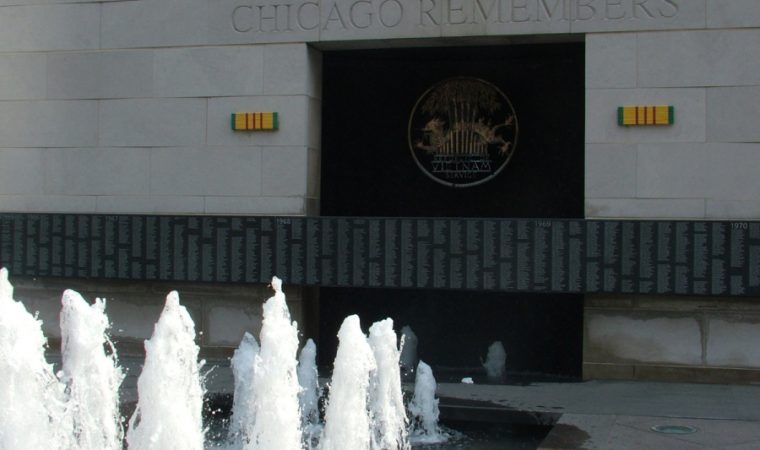
Fall arrives with the excitement of a new school year. Like last year, I am teaching both a First Year Program class for incoming undergraduates, and our graduate students in the Master of Science in Historic Preservation program. SAIC maintains an enviable, nationally recognized position at both levels, and enrollment is up this year. When I advertise our graduate program, I advertise Chicago, because to me the city is the best classroom of all, and that is how I treat my undergraduate course as well, a Community Based Practices Research Studio that I call If These Streets Could Talk. We spend a lot of time walking the city, sketching it, and looking at monuments to history, both purposeful, like the plaque on the Chicago River marking the site of the Eastland disaster, or the Chicago Vietnam Memorial as well as the accidental, like the statue of Irv Kupcinet by my frend Preston Jackson. “Kup” is well rendered, but his gesture toward his longtime place of employment – the Chicago Sun-Times building – has morphed into a seeming advertisement for the new Trump Tower, which now occupies the site. Continue Reading
End of March
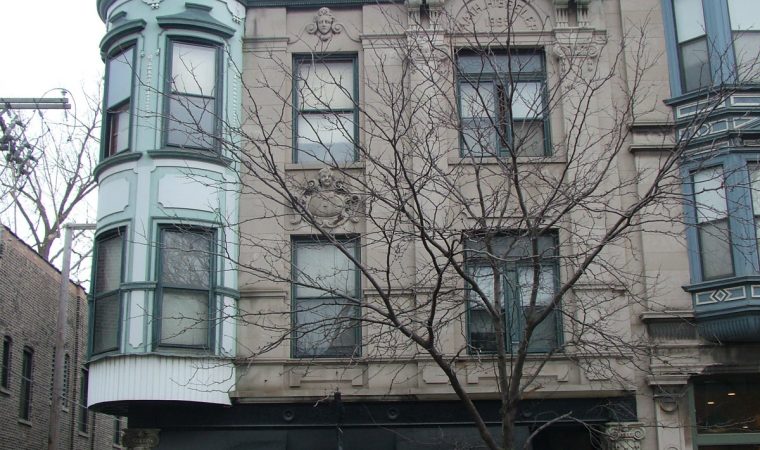
March is going out more lionine than lamblike and perhaps April will be less hectic – it looks like I am staying in town all month (unless you count two tours to Lockport and Joliet for AIC). Our Masters in Historic Preservation program has a lot going on this month, starting next Monday, April 6 when my seminar class presents our ideas for interpretation of the Armitage-Halsted district to Alderman Vi Daley, the CTA and members of the Sheffield community. This class has done a great job of tackling a range of interpretive elements, from website and brochure and banners to a couple of installations at the Armitage L station designed to get people looking at the amazing buildings of the Armitage-Halsted historic district, with their Renaissance (Baroque) inspired architectural details in metal, stone and brick. Here are a few samples of these delicious buildings: Continue Reading