Great Chicago Churches

Twenty years ago when I worked at Landmarks Illinois, we did a survey and planning study of historic houses of worship in Chicago. This was one of many preservation responses to a crisis in church preservation spurred on by the 1987 closing of two huge Catholic churches that were imposing neighborhood landmarks, Holy Family Church (1857) on Roosevelt Road, and St. Mary of the Angels Church (1920) in Bucktown. Continue Reading
Preservation Religion
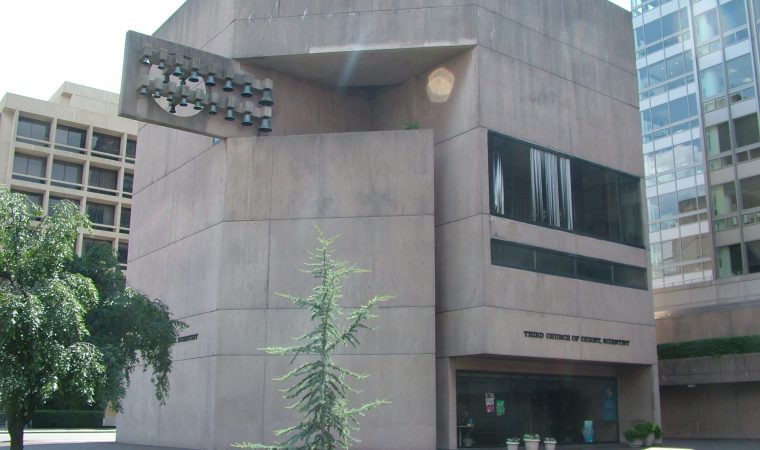
The preservation of religious structures has been on my mind because I lectured on the subject in Planning class Monday, and also because I met Thursday with Bob Jaeger and Tuomi Forrest of Partners for Sacred Places, a national organization that helps religious congregations fulfill their mission with their buildings, which is to say that they help save religious buildings. And I was thinking about it because I was in Washington Friday and the Post reported on the landmark designation of the Brutalist Christian Science Church pictured here.
The church was designated over the objections of its owners, something that can’t be done in Chicago thanks to a last-minute, one-sentence amendment duct-taped to the Chicago Landmarks Ordinance 20 years ago. Twenty years ago is when the “church” preservation issue emerged as a national concern and I developed some expertise by virtue of experience in the issue, being involved in local efforts to save Holy Family and St. Mary of the Angels churches (successfully), doing a citywide survey of historic houses of worship in 1990, and serving on task forces and committees that created a local “church” preservation group, Inspired Partnerships, that operated through the 1990s. We also tried to challenge the “church exception” to the landmarks ordinance and failed, not because our 1st and 14th amendment issues were wrong, but because the case was not ripe. Continue Reading
Saved By Technology II
I have taught Preservation Planning for more than a dozen years and I always include a lecture called “Churches, Theaters and Other Difficult Buildings”. These buildings are “difficult” because they are functionally obsolescent: They were designed for large public assemblies in a pre-automobile era, and nowadays assemblies don’t happen so much. Vaudeville movie theaters combined live and cinematic entertainment and we don’t do that anymore either. Movie theaters today need to have lots of screens for maybe 200 people each, and even big markets like Chicago can only support a handful of live performance venues of 4,000 seats or so. Churches become obsolescent when denominations change, as they have in Chicago neighborhoods for over 40 years, and despite the lingering religiosity of Americans, many people are in exurban superchurches or use religiosity as a wedge against preserving historical features of their buildings. Continue Reading
Another church burns
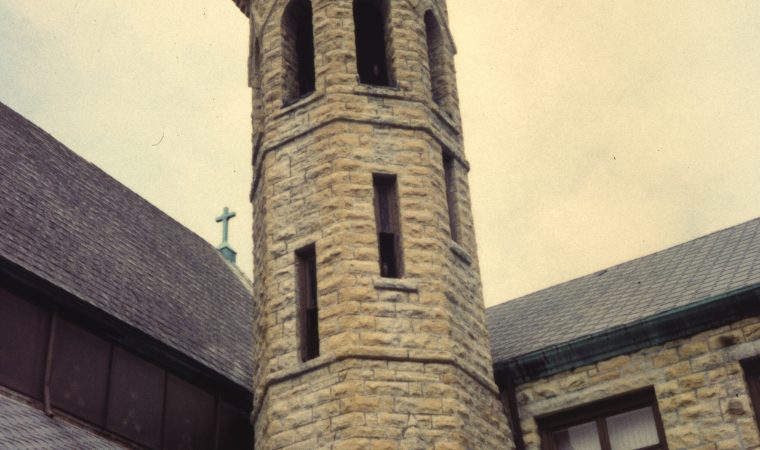
Joliet’s Christ Episcopal Church burned this weekend. I will really miss this one and it is apparently a total loss, although the quaint Gothic tower pictured here survives. This one was intact – had a fantastic interior with clustered columns and a real nave-like nave – which means the ceiling read like a boat. It was an 1887 masterpiece of picturesque Gothic by Frank Shaver Allen, who gave Joliet a lot of grace.
Harrah’s casino has meant a lot of money to Joliet, mostly in exchange for that grace. Harrah’s has demolished a dozen buildings in Joliet – many made of local limestone like Christ Episcopal, mostly for parking. It wanted this beautiful church because of its location, and it wanted to demolish it. Continue Reading