The emotional logic of Authenticity

I & M Canal at Lockport. Figure in the distance is one of the results of our Wayfinding project, a Cor-Ten steel silhouette of a historic figure, in this case Wild Bill Hickok.
I teach courses on Interpretation, a topic I was involved in in the mid-1990s when I was tasked with setting up a Wayfinding system for the I & M Canal National Heritage Corridor. The challenge there was prodigious, trying to make visible the geological and historical connections between 100 miles of industrial towns and parks in a diverse modern landscape.
Continue Reading
Genocide Tourism
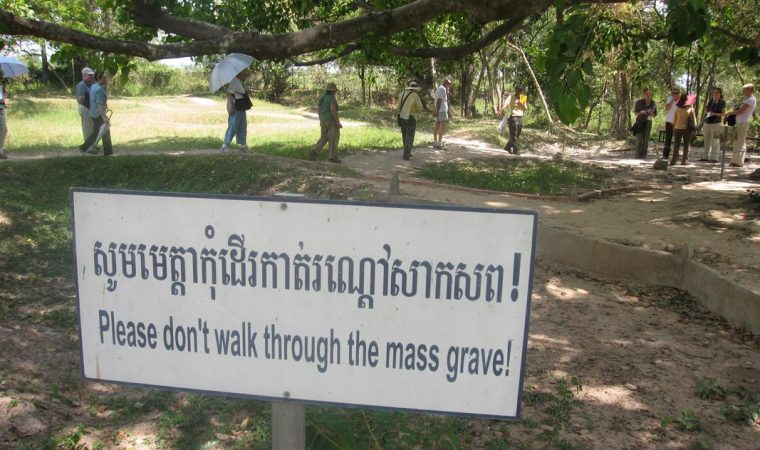
There is a very traditional view of conserving historic sites that considers such sites to be honorific and edifying; noble and good. The Mount Vernon Ladies Association of the Union saved Mount Vernon to honor George Washington as the founder of the United States. Of course, they were also trying to protect his home from the depredations of “manufactories” and prevent the Civil War, but their primary stated goal was honorific.
Similarly, much of 19th century American preservation was about battlefields and founding fathers. But historic sites are also saved as warnings to posterity; as legacies or reminders of very horrible events that are the opposite of honorific: we save them because there are lessons to be learned. The Germans have a word for this kind of landmark: Mahnmal, as opposed to the more generic Denkmal or the honorific Ehrenmal. And it was in Germany 30 years ago that I first encountered genocide tourism.