The emotional logic of Authenticity

I & M Canal at Lockport. Figure in the distance is one of the results of our Wayfinding project, a Cor-Ten steel silhouette of a historic figure, in this case Wild Bill Hickok.
I teach courses on Interpretation, a topic I was involved in in the mid-1990s when I was tasked with setting up a Wayfinding system for the I & M Canal National Heritage Corridor. The challenge there was prodigious, trying to make visible the geological and historical connections between 100 miles of industrial towns and parks in a diverse modern landscape.
Continue Reading
False Choices and the Process of Preservation

Reportedly the largest chandelier in the United States and the 7th largest in the world. Would you hold a party under this for a 25-year old preservation planner who had been working in the field for less than three years? I will be there again tomorrow.
I am fond of saying that heritage conservation (historic preservation) is a process. It is the process whereby a community (however defined and constituted) determines what elements of its past it wants to bring into the future. The process consists of establishing context (historical, architectural, environmental, social), criteria, evaluating resources (tangible and intangible) and then determining how we want to treat those resources in the future.
Genocide Tourism
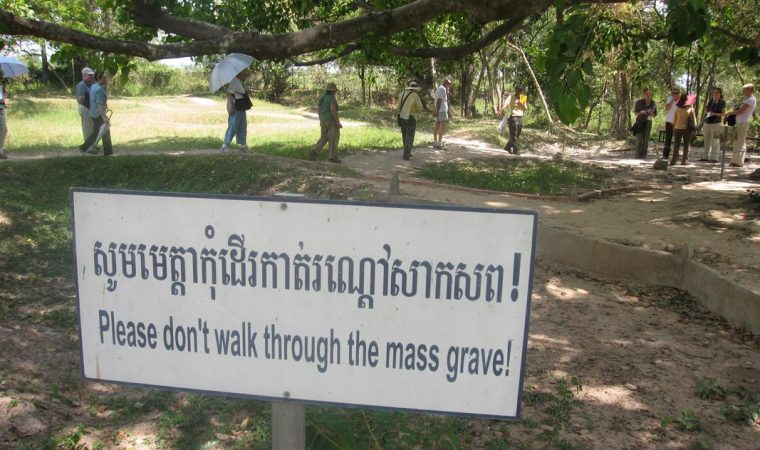
There is a very traditional view of conserving historic sites that considers such sites to be honorific and edifying; noble and good. The Mount Vernon Ladies Association of the Union saved Mount Vernon to honor George Washington as the founder of the United States. Of course, they were also trying to protect his home from the depredations of “manufactories” and prevent the Civil War, but their primary stated goal was honorific.
Similarly, much of 19th century American preservation was about battlefields and founding fathers. But historic sites are also saved as warnings to posterity; as legacies or reminders of very horrible events that are the opposite of honorific: we save them because there are lessons to be learned. The Germans have a word for this kind of landmark: Mahnmal, as opposed to the more generic Denkmal or the honorific Ehrenmal. And it was in Germany 30 years ago that I first encountered genocide tourism.
Managing Change, or We Are Technology

Little Black Pearl, 47th & Greenwood, Chicago
Managing change is what the historic preservation/heritage conservation field does. It is not about preserving “the past” or old buildings but repurposing significant elements of the past environment for future use.
Modern historic preservation in the United States dates from the 1960s, and it came up in an era of “new history” that replaced the old political history (wars, leaders, battles, boundaries) with a history that tried to convey what was happening to most people in their social and economic everyday. In a sense, history – as an academic discipline – was catching up with the globalization that industrial capitalism had launched at the time of the American Revolution in the late 18th century. In the old history, agency – what makes things happen – was leaders and battles, etc. Agency in the new history had much broader social and economic dimensions. As my favorite Leeds musical group sang way back in 1979 “It’s Not Made By Great Men.” Continue Reading
Lima Day 5
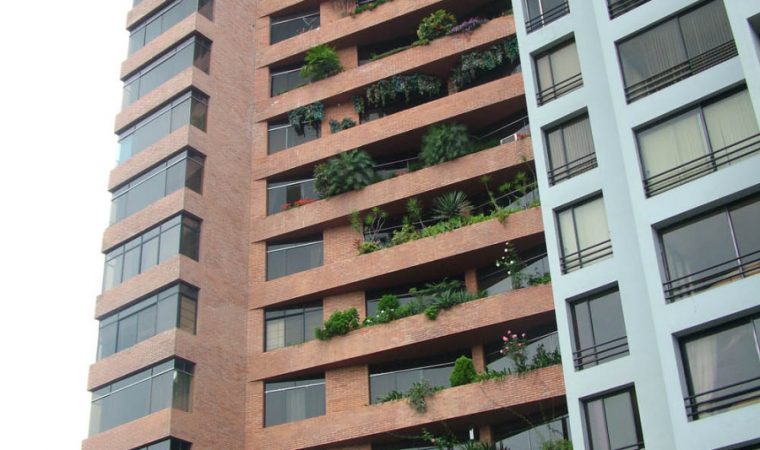
Today we found two more huacas and lots of nice buildings and parks, mostly in the swank San Isidro neighborhood, which is next to Miraflores. We started by getting into the concrete parabolic church we saw yesterday (see post below from yesterday) then we wandered along Avenida Camino Real (so I had Tennessee Williams on the brain) and saw this lovely highrise with hanging gardens terraces (and attendant brick issues) Continue Reading
Lima Day 4
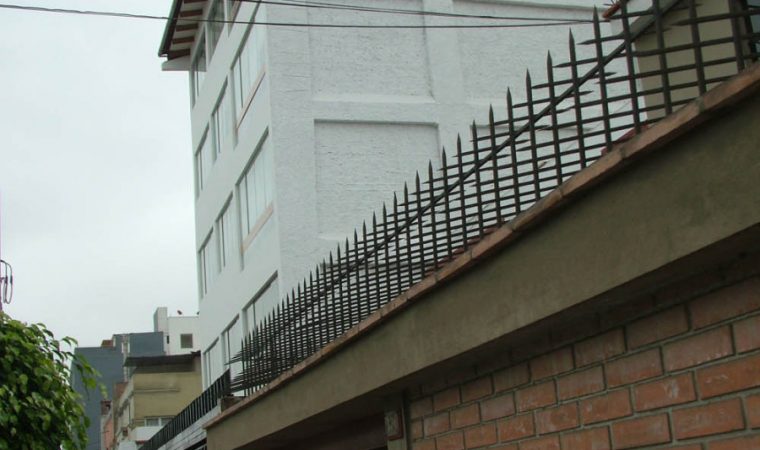
Only a half day of work today, and most of it wasn’t me, but Frances and Douglas working with Nicholas designing a small demonstration urban agricultural installation for Parque La Muralla. This afternoon Douglas and I went with Erika (SAIC alum and translator) for a walk through Miraflores, the neighborhood we are staying in. Despite its relative safety, EVERYTHING is gated and security camera-ed and barbed wire-d. Continue Reading
Lima Day 3

Day 3 in Lima was quite exhausting because we started by getting up at 5 AM to go to the farthest side of town (Comas) to join the Mayor as she started a project to plant 40,000 trees in the city. Here is SAIC’s Frances Whitehead, the leader of our Peru project, talking with Mayor Susanna Villaran. You can also see our main partners, Gunther Merzthal to the left and Anna Zuchetti to the right.
We got a chance to introduce the Mayor to our proposed collaboration, helping bring urban agriculture into the center of the city, the World Heritage area, while also supporting local community development. The ceremony included of course schoolchildren and the tree planting itself. Continue Reading
Lima Day 2

Today we met with Arquitecto José Rodriguez Cárdenas, who is in charge of the Historic Center of Lima, to discuss possible projects in the World Heritage center of Lima. Now, most tourists see only the historic center, which includes the Cathedral and those lovely old buildings surrounding the Plaza de Armas
Turns out, most of the square was actually built in the 20th century, as we learned, although the feeling is of course from an earlier era. I was also surprised to find that many of the older buildings we saw within the World Heritage district were actually from the 1920s despite their obvious Baroque Colonial influences.
Connecting the Past

Students working in Weishan, 2009
I am just back from the US/ICOMOS conference “Why Does the Past Matter” at University of Massachusetts Amherst, sponsored by the University’s center for Heritage and Society. I gave a paper on our work in Weishan, as a contrast to the touristic monocultures that often engulf heritage sites in China (and made several new Chinese friends in the process).
The conference features many archaeologists amongst its collection of heritage professionals and scholars, and I saw quite a few excellent papers and made quite a few new friends while rekindling old connections like Henry Cleere, an esteemed English colleague whom I spent a week with in the Ukraine in 2006. Continue Reading
All Preservation Is Local

Consulting at Tustan, Ukraine, 2006
So what am I doing on statewide, national and international boards?
“All preservation is local” is a mantra in our field, one as true as its source analogue: “all politics is local”. This poses challenges for organizations like the Global Heritage Fund (where I serve on the Senior Advisory Board), National Trust for Historic Preservation (where I am a Trustee) and Landmarks Illinois (where I serve on the Board.) In each case, the larger organizations are often working with and supporting the efforts of local preservationists. Continue Reading