the quantum mechanics of culture

MEANING DOESN’T MATTER; ONLY MOVEMENT HAS MEANING
– written in magic marker across the top of my windscreen in 1984 –
When I studied history in college I reasoned that historical events were “overdetermined,” that is to say that they could not be explained by simple cause-and-effect. The causes of World War I, for example, are a big mushy stew of militarism, a rising capitalist industrialism, a Byzantine network of alliances and treaties, and a global economy still shedding the creaky structure of mercantilism. The assassination of the Archduke Franz Ferdinand in Sarajevo was the “event” at a point in time and space which purportedly set these multiple causes into motion.
Ciudad Perdida: The Urbanism of the lost city

Los Angeles, a couple weeks ago
A year ago I was teaching a class about cities, about urbanism. The perspective of that class was the history of ideas about modern city planning from the 1890s through the rise of modernism and sprawl in the 1950s to the Jane Jacobs revolution in the 1960s and its continual reverberations to the present day. We read Glaeser, whom I have reviewed before in this blog, and we tended to think of cities in their modern iteration, as large megalopoli built on huge freighters, large trucks, mile-long trains and cars more numerous than bubbles in a champagne glass, their profiles distinguished by skyscrapers recognizable from miles away, their plans defined by a radical manipulation of the natural landscape. Something entirely different from the cowering walled cities of the medieval world. Something defined, as Le Corbusier was wont to do, by fast and effortless modes of transportation.
Think of the postcards of skyscrapers from the 1920s, always with planes flying around them, cars and trucks bustling at their bases, dirigibles docked on their masts. The modern city was about effortless transportation and commerce, about erasing barriers to speed, whether vertical or horizontal. The skyscraper and the highway, massive and modern. Continue Reading
Context, Culture, and the Authenticity Fetish

Pheakday Ngounphon at Banteay Chhmar
One of the themes that I have repeated in this blog over the years: that preservation is a process, not a set of rules, is being born out daily in my work as Executive Director of the Global Heritage Fund (join here!). That is because we deal with a great variety of cultures and contexts across the world, from Asia to the Middle East, from South to North America, and from remote archaeological sites to vernacular villages and cities.
The process of historic preservation/heritage conservation is actually quite consistent: Identification, Evaluation, Registration, and Treatment. My old friend Ted Hild of the Illinois Historic Preservation Agency used to label it as “hunt ’em, catch ’em, cook ’em and eat ’em,” which is a fun analogy. Fun aside, the point is the process, and what the Burra Charter famously recognized back in 1999 was that while the process can be consistent across continents and cultures, there are really not universal standards for identification, evaluation, registration, and treatment. What a particular culture in a particular context IDENTIFIES as significant may differ – in terms of tangible versus intangible heritage; in terms of social history versus design history: in terms of the stories it deems indelible to the transmission of cultural heritage. The Burra Charter and subsequent protocols have urged us to heed this cultural input at each step of the process: WHAT do you think is important; HOW do you evaluate that importance; WHAT do you do legally or politically to enforce this; and HOW do you treat the resource you have identified, evaluated and registered? Continue Reading
Authenticity in Heritage Conservation

California Street, San Francisco
In this blog I have often celebrated a definition of heritage conservation (historic preservation) as a process whereby a community determines what elements of its past it wants to bring into the future. The virtues of this definition are many. It allows for both tangible and intangible heritage: buildings, sites, structures and landscapes as well as music, costume, craft, festivals and a host of other folkways, without privileging one or the other. It allows for the passage of time: how we define what is important in the past cannot remain static. Even the definition of authenticity changes over time, a point made by Yan Zhang at our Asia Forum in May and quoted by me in a Huffington Post blog recently. Continue Reading
Trip to Banteay Chhmar, Cambodia

I am on the Global Heritage Fund UK trip to Cambodia this week to see our project at Banteay Chhmar. Led by our Senior Director John Sanday, OBE. We began the trip with a visit to Angkor, including the famous Angkor Wat. An image of Angkor Wat is the center of the Cambodian flag, and as our compatriot John Pike noted, Cambodia is the only country in the world with an image of a heritage site on its flag. You could argue that the very existence of the country is based on heritage – the Khmer empires of the 9th through 14th centuries were centered at Angkor, and the sheer quantity of intricately planned and carved stone monuments here made it impossible to overlook despite its weakened state. Continue Reading
Conserving Culture and Conserving Nature: Assets and Liabilities

The World Heritage Convention is nearing the end of its 40th anniversary, and since what we do here at Global Heritage Fund is help preserve World Heritage Sites in developing countries, I have been fielding a lot of inquiries on the status of the World Heritage Convention. As in so many aspects of heritage conservation/historic preservation, I have seen evolution in the field. In terms of sites inscribed on the World Heritage list, I would venture that we have seen some of the same shifts we have seen in “historic preservation” as a whole.
Continue ReadingCalifornia and Chicago: Beauty and the Beast
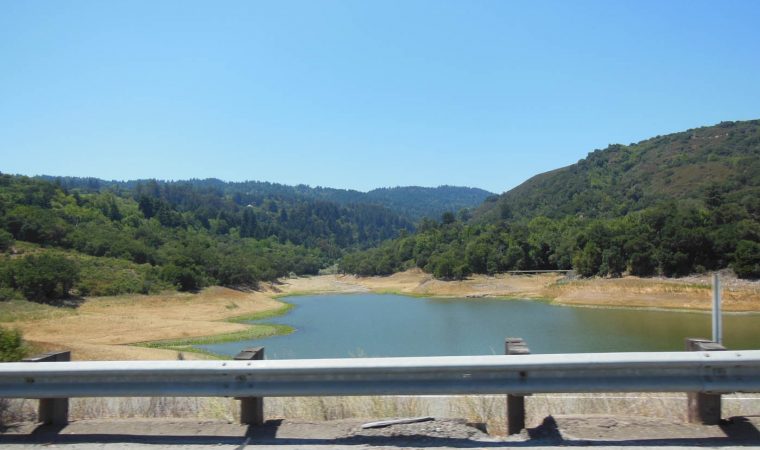
Traffic is a drag in both places, but here you get this to look at
California is a fiction and a romance, indeed it takes its name from a novel of an exotic utopia, and since the earliest European encounter, it has been a place where dreams come real, from the dreams of missionaries and miners to the visions of moviemakers and microcomputer mavens that continue to radiate around the world.
Chicago is a fiction too, but it is less wish-fulfillment and more film noir, captured pretty persuasively in Call Northside 777 with the great Jimmy Stewart. Titans of industry fulfilled their dreams of filthy lucre there, as did the gangsters. Today it is an international destination as well known for art food and music as it once was for smokestacks and blind pigs, but it will never be confused with the sun-kissed valleys and tree-bedecked mountains of the Golden State. Continue Reading
Historical Societies

with Anthea M. Hartig, PhD
My friend and colleague Dr. Anthea Hartig, who last year became the Executive Director of the California Historical Society, asked the provocative question: What is a Historical Society in the 21st Century? Good question. What does it mean? And what has it meant? I asked for her help answering this question and got it…. Continue Reading
Stone Circles

As you walk through the Redwood forests of Northern California, you see the evidence of a natural process found in many forests: a tree dies, and around its stump shoots rise, and eventually become trees themselves, arranged in a circle around the “ghost” of the original tree.
The tree-worshipping cultural groups of Northern Europe prized these tree circles, and indeed wooden circles and stone circles are associated with the Celts, who through prehistory migrated right across Europe from its southeastern to northwestern corners, leaving wooden and stone circles in their wake. Continue Reading
Categories Are Your Frenemies

When I was a kid, there was a tween game where you sat in a circle and clapped and called out “Categories! Names Of!” and then someone shouted a category and you had to keep on shouting out examples of that category or you lost the game.
The nature of thought requires us to divide things into categories. This is good, because it facilitates learning. We need categories to begin to understand the multivalence of our world. To this extent, categories are our friends. As our understanding progresses, we begin to see the limitations – the false boundaries – of categories. As we grow, categories become our enemies.
Architectural history is a good example. We begin by learning styles and periods. Federal, Italianate, Queen Anne, Richardsonian Romanesque, Beaux-Arts, Craftsman, Art Deco. We study the defining characteristics of each of these styles and pretty soon we are able to survey buildings in the streetscape and categorize them.